Long before Merazonia existed, its founders were already getting their hands dirty. Years of volunteering at wildlife centres across South America brought them experience, inspiration and, eventually, a shared idea: why not build something of their own? A place where rehabilitation came first, and where every animal that could return to the wild would get that chance.
The Beginning
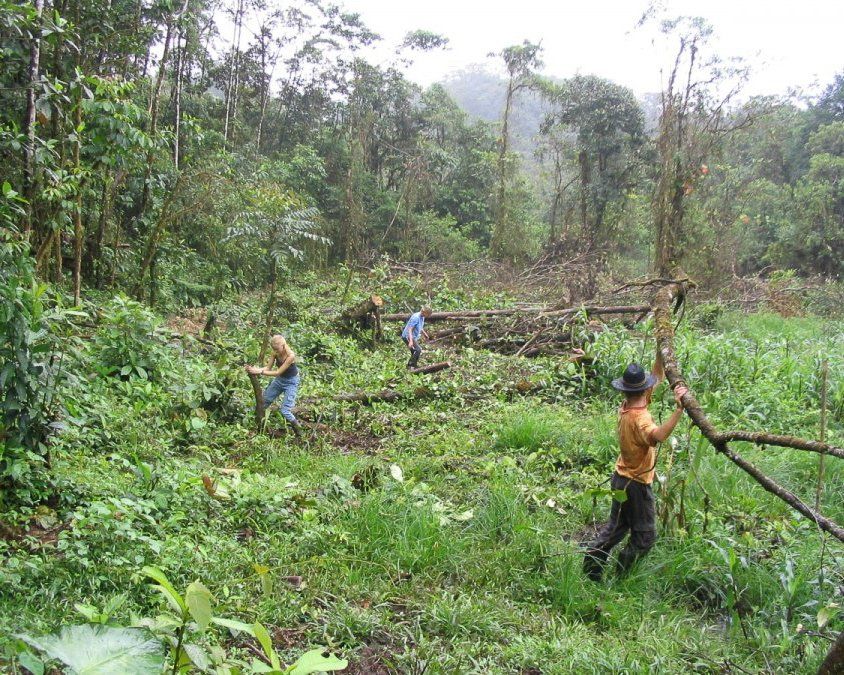
Work began in the autumn of 2004. With no major funding behind us, each of Merazonia’s founders put their own money into the project. It was enough to purchase 100 hectares (250 acres) of rainforest and buy the first building materials. There were no roads, no buildings and no infrastructure - just a narrow jungle path leading into the forest. Every day, we made the journey from the nearby town of Mera to start building Merazonia from the ground up.
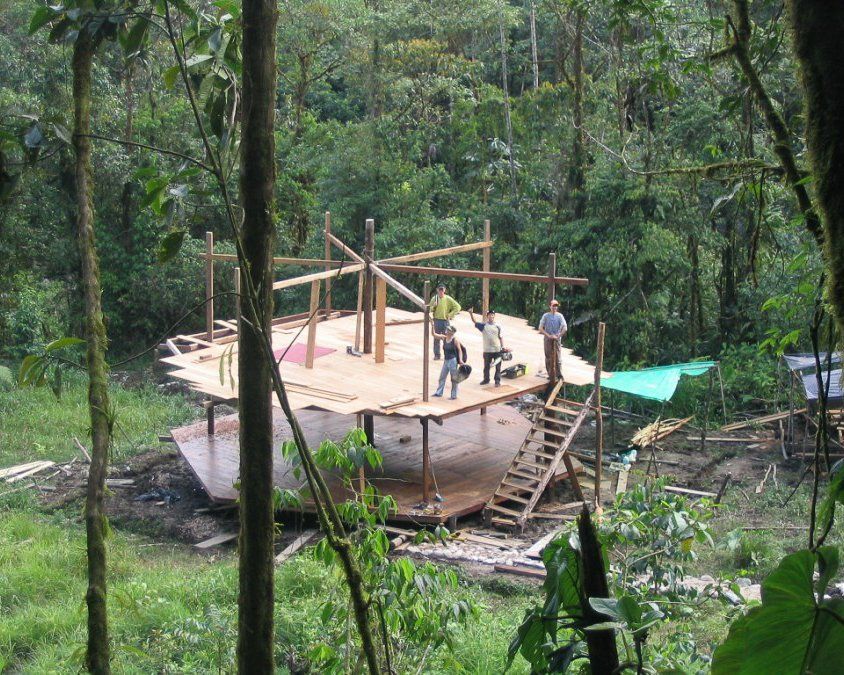
From day one, volunteers rolled up their sleeves and joined us. Building in the middle of the rainforest meant doing almost everything by hand: carrying endless loads of rocks and sand and hauling heavy wooden beams along jungle trails. Our only form of transport was Monty, our loyal workhorse.
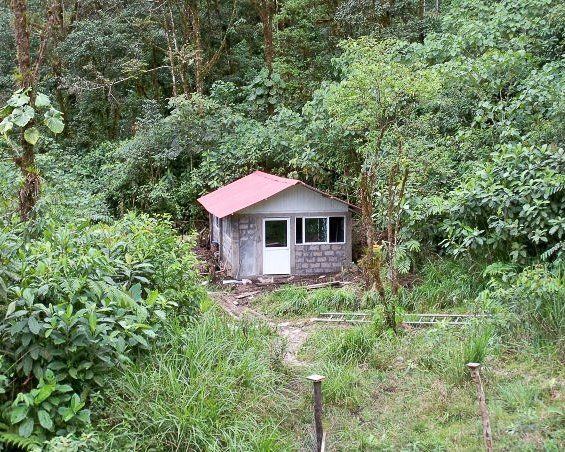
It was slow, exhausting work, but little by little, path by path and building by building, Merazonia began to emerge from the rainforest.
Animal Refuge
By early 2009, the basic structures were finally in place and the long process of obtaining all the necessary permits was complete. Then, one day in January, a tiny baby tamarin named Lukas was carried across the bridge. He was Merazonia’s very first animal and officially marked the beginning of our life as a wildlife rescue centre.
Fittingly, Lukas’s story would also come to represent what Merazonia was all about. He grew up, became the leader of his own tamarin group and was eventually released on the Merazonia reserve, where he went on to live a life in the wild.
Team Effort
Team effort
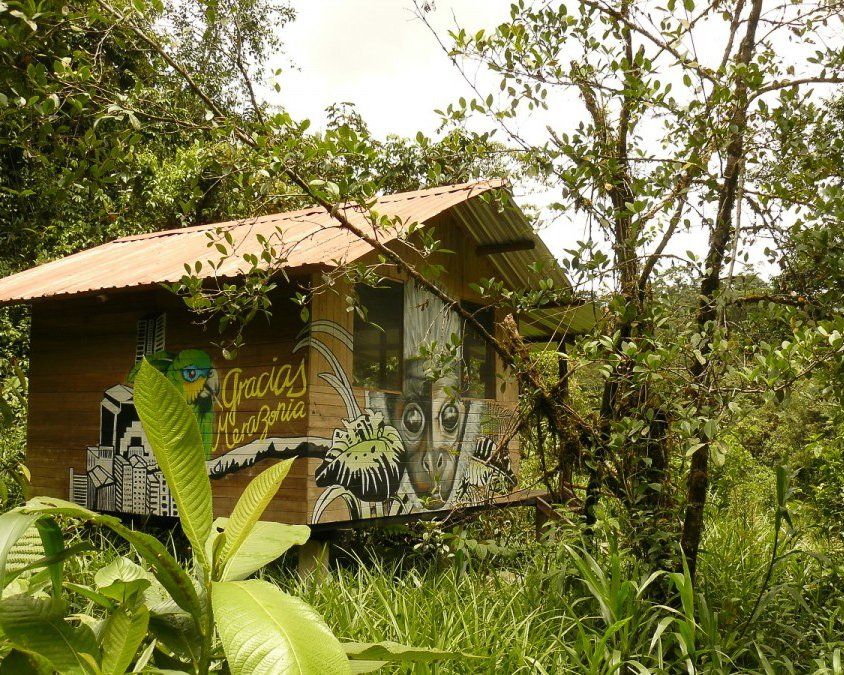
Since Lukas first crossed the bridge, hundreds of animals (and volunteers) have followed in his footsteps. Along the way, Merazonia has grown from a handful of basic structures into the wildlife rescue and rehabilitation centre it is today, allowing us to care for more animals and take on increasingly ambitious rehabilitation and release projects.
The work has changed too. Where the first volunteers spent their days carrying rocks and sand through the jungle, today they dedicate most of their time to the animals themselves. Enclosures keep improving, diets and care become more specialised, and our rehabilitation and release programmes continue to evolve through experience, research and new technology.
But one thing has never changed: Merazonia has always been a team effort. We are incredibly proud to have built this place with our own hands, alongside the many volunteers who have joined us over the years. Merazonia was built by people who were willing to roll up their sleeves for wildlife - and this remains a big part of what makes Merazonia special.